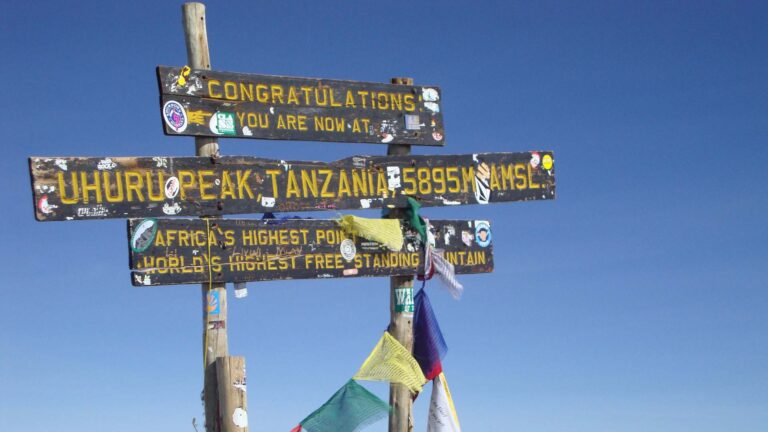
Meaning of Kilimanjaro: Name Origins and Cultural Significance

Meaning of Kilimanjaro: name origins, Chagga culture and the cultural significance of Africa's highest mountain. Book your Kilimanjaro climb.

Mount Kilimanjaro is not only Africa’s tallest mountain, but it also carries a name full of mystery, history, and cultural weight. Over the centuries, this majestic peak has been interpreted, renamed, and revered by different communities and explorers. Zanzibar Tanzania explores the fascinating story behind its name and significance.

What Does Kilimanjaro Mean?

The name “Kilimanjaro” has puzzled historians and linguists for generations. It is believed to be a combination of Swahili and Chagga words:

  • “Kilima” means “mountain” in Swahili

  • “Njaro” might come from the Chagga word for “whiteness,” referencing the snow-capped peak

Despite these interpretations, no single definition is universally agreed upon.

The Chagga People and Their Sacred Mountain

The Chagga people, who live on the slopes of Kilimanjaro, have always regarded the mountain with reverence. To them, Kilimanjaro is not just a geological formation but a sacred, spiritual place, deeply woven into their traditions, stories, and cultural identity.

European Explorers and the Colonial Influence

When European explorers arrived in East Africa, they documented the mountain and began calling it “Kilimanjaro”, adapting local words through their own linguistic perspective. This colonial naming helped the term gain global recognition, though it may have slightly altered its original meaning.

A Mountain of Many Names—and Even More Stories

Across cultures, Kilimanjaro has been known by different names, each reflecting a unique relationship with the mountain:

  • Some tribes called it the “Mountain of Caravans”

  • Others highlighted its icy crown or spiritual symbolism

Each name adds another layer to its identity, showing how deeply Kilimanjaro is woven into the stories and beliefs of those around it.

Climbing Mount Kilimanjaro Today

Today, Kilimanjaro is among the most popular trekking destinations in the world. While climbers seek adventure, understanding the cultural significance behind the mountain’s name adds depth and meaning to the journey.

So, What Does Kilimanjaro Mean—Really?

The truth is, there’s no definitive answer. Kilimanjaro’s name is likely a fusion of multiple languages and interpretations, evolving over centuries. What remains clear is its symbolic power, representing both natural beauty and cultural richness.

📌 Quick Facts Recap

  • “Kilima” means “mountain” in Swahili

  • “Njaro” might refer to whiteness or a demon in Chagga legends

  • The mountain is sacred to the Chagga people

  • European colonizers played a role in standardizing the name

  • The meaning is not fully known, adding to its mystique

A Name Shrouded in Stories, Not Certainty

In the end, Kilimanjaro’s name is as mysterious and majestic as the mountain itself. Whether viewed through spiritual, linguistic, or historical lenses, one thing is certain: it carries the echoes of many voices across time.

Plan Your Trip: Meaning of Kilimanjaro

meaning of Kilimanjaro

Turn this guide into your own adventure. Our local team at Zanzibar Tanzania can arrange everything for you:

Keep reading: Who Was the First Person to Summit Kilimanjaro? · Where Is Kilimanjaro?

Helpful resource: Kilimanjaro National Park – UNESCO World Heritage

Have questions? Contact our travel experts or book your trip now – we reply within 24 hours.

Book Custom Trip Today

📞 Book Your Tanzania Safari Today!

Let us help you plan your dream safari adventure.

📩 Email: info@zanzibartanzania.co.tz
📞 Phone / WhatsApp: +255 657 624 466
🌍 Website: www.zanzibartanzania.co.tz

Climbing Mount Kilimanjaro FAQs

Ready to Explore Wildlife in Style?

Ready to explore wildlife in style? Embark on a journey where comfort meets adventure as you discover Tanzania’s breathtaking landscapes, vibrant wildlife, and unforgettable natural wonders. Enjoy expertly planned safaris, stylish accommodations, and a smooth, safe travel experience designed to make every moment special. Your dream wildlife adventure starts here—premium, memorable, and tailored just for you.

Frequently Asked Questions – Zanzibar Tanzania Cars Rental

You can rent a car easily by booking online through our website, sending us an email, or visiting our office in Zanzibar. Simply choose your preferred car, rental dates, and pickup location, and we’ll confirm your booking instantly.

You’ll need:

A valid driver’s license (international or national)

A copy of your passport

A temporary Zanzibar driving permit (we can help you obtain it upon arrival)

Yes, you can. However, you’ll also need a temporary local driving permit, which we can arrange for you within minutes.

We offer a wide range of vehicles including:

Compact cars for city drives

SUVs and 4x4s for island exploration

Vans and minibuses for groups or families

Luxury cars for special occasions

Yes, we offer both automatic and manual cars to suit your driving preference.

Our rates vary depending on the type of vehicle, rental duration, and season. We offer affordable daily, weekly, and monthly packages. Contact us for a personalized quote.

Yes, all our vehicles come with basic insurance coverage. Comprehensive insurance options are also available at an additional cost.

Absolutely! We provide free pickup and delivery services to Zanzibar Airport, Stone Town, or your hotel anywhere on the island.

No, our rentals come with unlimited mileage, allowing you to explore Zanzibar freely.

In the rare case of a breakdown, we offer 24/7 roadside assistance and will replace your car as quickly as possible.

Yes, a small refundable deposit may be required depending on the vehicle type and rental period. It will be returned once the car is returned in good condition.

Yes, we offer professional driver services if you prefer a chauffeur-driven experience.

Cars are provided with a specific fuel level and should be returned with the same amount. Full-to-full fuel policy is preferred.

No, cars rented in Zanzibar must remain on the island and cannot be taken to mainland Tanzania.

We accept payments via cash (USD, TZS, or EUR), credit/debit cards, and mobile payments. Online payments are also available for convenience.

Yes, child seats are available upon request at a small extra charge.

Yes, we offer discounted long-term car rental options for monthly or extended stays in Zanzibar.

We operate 24 hours a day, 7 days a week, including weekends and holidays.

Book from the Hired Cars in Zanzibar

Per day price $ 30

2002, 2005, 2009

Per day price $ 45